A Brief History of Ballroom Dance

Ballroom dance is a broad term that encompasses a variety of dance styles that are performed in a ballroom setting. These styles include the Waltz, Tango, Foxtrot, Quickstep, and Viennese Waltz. The history of ballroom dance can be traced back to the 16th century in Europe, where it was primarily a social activity for the upper class. However, it wasn’t until the 19th century that ballroom dance began to be formalized and Standardized.

Ballroom Goes Mainstream

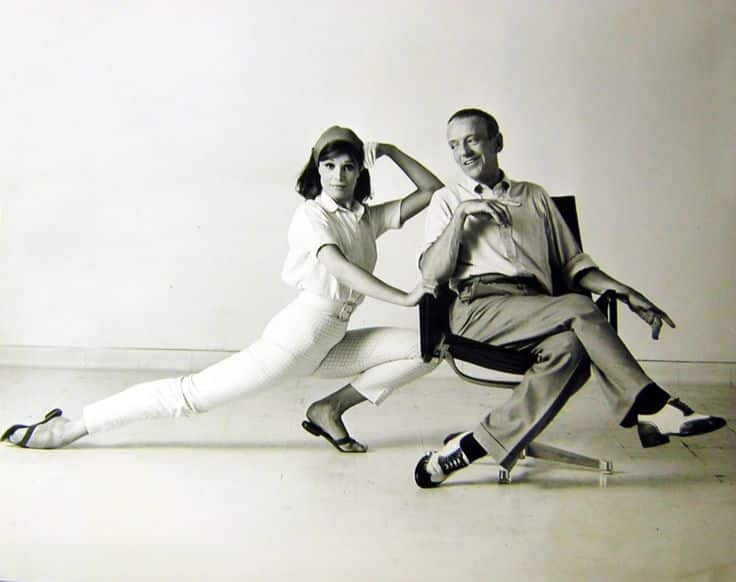
Barrie Chase with Fred -One of the most iconic figures in ballroom dance history is Fred Astaire. Astaire was a Hollywood actor and dancer who appeared in a number of musical films throughout the 1930s and 1940s. He is best known for his partnership with Ginger Rogers, with whom he appeared in 10 films. Astaire’s smooth, elegant style and ability to make complex dance routines look effortless helped to popularize ballroom dance in the United States and around the world.

The Ballroom TV Revolution6329cfb3edbe7f00190f00a1 -

In the mid-20th century ballroom dance experienced a resurgence in popularity due to its inclusion in popular culture. The television show “Dancing with the Stars” which started in 2005, has helped to introduce a new generation to the world of ballroom dance and has made it more accessible to the general public. The show features celebrities paired with professional dancers, as they compete against each other in a variety of ballroom dance styles.

In recent years, ballroom dance has also experienced a resurgence in popularity in pop culture, with the success of films such as “Shall We Dance” and “Mad Hot Ballroom.” These films have helped to introduce the sport to a new audience and have made it more accessible to the general public.


Ballroom dance continues to evolve and change with the times, with new styles and variations being created all the time! Today, it is enjoyed by people of all ages and backgrounds, and is a beloved pastime for many.

For more information on the history of ballroom dance, you can check out the following resources:

The International Dance Council

The National Museum of Dance

Learn to Dance With Fred

These resources provide detailed information on the history, evolution, and current events in the world of ballroom dance!

What Heel is Best for You?

When it comes to shoes, comfort and performance go hand-in-hand. Possibly the most important component of a dancer’s outfit, the type of shoe and heel you choose is crucial. We’ve compiled a list of heels that suit different needs and dancer preferences.

Blog post Heels -Traditional Heel

The traditional dancing heel, known as the “Oxford” or the “Gibson,” is a classic for a reason. With a flat base, suede bottom and a slightly slanted and rounded top, this shoe is stable and durable. However, it trades comfort for durability – you may find yourself getting sore from heavy use.

Rounded Heel

Many ballroom dancers choose the rounded heel shoe for easier movement. This is the perfect heel for dancers who incorporate lots of dynamic movement into their dancing, allowing for higher mobility with a smaller chance of sliding out of control on the parquet. The lifted sole (as opposed to the flatter sole of the traditional heel) allows for a greater amount of control during high-movement dances.

Slanted Heel

Like the rounded heel, the slanted heel has an inclined back to make for easier movement. Instead of a rounded heel, however, it slants with the rest of the shoe. This heel is a great middle ground for dancers who are looking for the freedom of movement of the rounded heel while preserving the sturdiness and look of the traditional heel.

Cushioned Heel

If you’re looking for maximum comfort, then the cushioned heel is the choice for you. Featuring soft rubber between the suede base and the heel, this heel forefronts comfort above all else. It’s also noiseless on account of the cushioning. This heel may feel less stable than other heels for some dancers, but if comfort is your biggest priority, the cushioned heel is the one for you. Beware, though – the soft layer that makes the cushioned heel comfortable wears off quickly.

While this guide may be helpful for understanding what heel suits your dance style, it’s always encouraged to try them for yourself and find what suits you best. Happy dancing!

10 Tips to Improve Your Ballroom Technique

Any ballroom dancer can tell you, there is no easy way to get amazing at any particular ballroom style in a short period of time. However, there are certainly best practices that smart dancers will use to ensure they get the most out of every moment spent practicing, performing, and thinking about ballroom dance! Here are some of the best tips and pieces of advice we’ve heard over the years to encourage and support your hard work.


  1. Practice regularly. Consistency is key when it comes to improving your ballroom dancing technique. Set aside time each day or at least a few times a week to practice your steps and moves.
  2. Take lessons from a professional. One of our qualified Fred Astaire dance instructors can help you learn proper technique, as well as provide feedback and guidance customized to your interests and needs. They can also help you identify and correct any bad habits you may have picked up by accident!
  3. Watch videos of professional dancers. Study the movement and technique offads 2 - top ballroom dancers. Pay attention to how they move their bodies, how they use their arms, and how they hold themselves.
  4. Focus on your posture. Good posture is essential for ballroom dancing. Keep your shoulders back, your head up, and your chest out. This will help you move with grace and control.
  5. Work on your footwork. Ballroom dancing is all about footwork, so make sure you are paying attention to your steps. Practice different types of footwork, such as chasses, runs, and turns.
  6. Practice with a partner. Dancing with a partner is different than dancing alone, so it’s important to practice with someone else. A partner can help you work on your timing, lead and follow, and other important skills.
  7. Work on your frame. The “frame” is the connection between you and your partner. It’s important to maintain a good frame in order to move smoothly and seamlessly together.
  8. Pay attention to your timing. Timing is crucial in ballroom dancing. Practice counting the beats of the music, and make sure your steps are in time with the music. Practice with a wide variety of tempos to ensure you are comfortable in both fast and slow routines!
  9. learn-to-WEST-COAST-SWINGExperiment with different styles. Ballroom dancing encompasses many different styles, such as waltz, foxtrot, and cha cha. Try experimenting with different styles to find one that you enjoy and excel at, and have a conversation with your instructor about finding the style(s) that 
  10. Have fun! Remember that ballroom dancing is a hobby, and it should be enjoyable. Try not to get too caught up in perfection and have fun with the process of learning and improving.


Overall, ballroom dancing is a skill that requires practice, patience, and dedication. By focusing on proper technique, footwork, and timing, and by taking lessons from a professional, you can improve your ballroom dancing abilities and enjoy this beautiful art form.

The Gift of Dance Makes a Great Holiday Present!

Ballroom dance lessons make a perfect holiday gift because of the many benefits they can provide. Not only does dance help people to stay fit and healthy, but it also teaches them coordination, creativity and discipline. It’s a creative and out-of-the-box gift idea AND it’s a gift that keeps on giving.

Dance can be a great way for someone to express themselves creatively and learn something new in the process. It gives someone the freedom to explore their personal styles and tastes, and it’s a great way for someone to learn more about themselves (and the people around them).

Additionally, dance is known to reduce stress, improve moods, and foster better overall well-being.  So, dance lessons can be a great way to help someone in your life improve their physical and mental health.

Blog post Heels 1 e1671044700933 -Arguably the best part about dance (especially ballroom dancing) is that it can be enjoyed by anyone, at any age and at any skill level. It doesn’t matter if you’re 7 or 70 — the benefits of dancing don’t discriminate by age. Everyone is sure to get meaningful experiences through dance! Plus, it’s a great and easy way to make friends that share a common interest with you. When it comes to ballroom dancing, working with a partner (or multiple) means you get to learn to work as a team and even make close friends!

The list of benefits of dance goes on. Whether they are looking to become more physically active or simply want an activity that helps them relax and unwind during holidays, ballroom dance lessons are sure to bring joy this festive season. There truly is no better way to celebrate the holidays than with dance lessons. So this year, give the gift of dance and watch your loved one’s eyes sparkle with joy!

Need help finding the perfect studio your loved one can start their dancing journey? Look no further than Fred Astaire Dance Studios! We have hundreds of experienced instructors ready to pass on the skills of expert dancers. Plus, we host social events and parties so you can get even more out of dancing! For more information, visit our website or give us a call today!

The Gift of Dance Makes a Great Holiday Present!

Ballroom dance lessons make a perfect holiday gift because of the many benefits they can provide. Not only does dance help people to stay fit and healthy, but it also teaches them coordination, creativity and discipline. It’s a creative and out-of-the-box gift idea AND it’s a gift that keeps on giving.

Dance can be a great way for someone to express themselves creatively and learn something new in the process. It gives someone the freedom to explore their personal styles and tastes, and it’s a great way for someone to learn more about themselves (and the people around them).

Additionally, dance is known to reduce stress, improve moods, and foster better overall well-being.  So, dance lessons can be a great way to help someone in your life improve their physical and mental health.

Blog post Heels 1 e1671044700933 -Arguably the best part about dance (especially ballroom dancing) is that it can be enjoyed by anyone, at any age and at any skill level. It doesn’t matter if you’re 7 or 70 — the benefits of dancing don’t discriminate by age. Everyone is sure to get meaningful experiences through dance! Plus, it’s a great and easy way to make friends that share a common interest with you. When it comes to ballroom dancing, working with a partner (or multiple) means you get to learn to work as a team and even make close friends!

The list of benefits of dance goes on. Whether they are looking to become more physically active or simply want an activity that helps them relax and unwind during holidays, ballroom dance lessons are sure to bring joy this festive season. There truly is no better way to celebrate the holidays than with dance lessons. So this year, give the gift of dance and watch your loved one’s eyes sparkle with joy!

Need help finding the perfect studio your loved one can start their dancing journey? Look no further than Fred Astaire Dance Studios! We have hundreds of experienced instructors ready to pass on the skills of expert dancers. Plus, we host social events and parties so you can get even more out of dancing! For more information, visit our website or give us a call today!

10 Tips to Improve Your Ballroom Technique

Any ballroom dancer can tell you, there is no easy way to get amazing at any particular ballroom style in a short period of time. However, there are certainly best practices that smart dancers will use to ensure they get the most out of every moment spent practicing, performing, and thinking about ballroom dance! Here are some of the best tips and pieces of advice we’ve heard over the years to encourage and support your hard work.


  1. Practice regularly. Consistency is key when it comes to improving your ballroom dancing technique. Set aside time each day or at least a few times a week to practice your steps and moves.
  2. Take lessons from a professional. One of our qualified Fred Astaire dance instructors can help you learn proper technique, as well as provide feedback and guidance customized to your interests and needs. They can also help you identify and correct any bad habits you may have picked up by accident!
  3. Watch videos of professional dancers. Study the movement and technique offads 2 - top ballroom dancers. Pay attention to how they move their bodies, how they use their arms, and how they hold themselves.
  4. Focus on your posture. Good posture is essential for ballroom dancing. Keep your shoulders back, your head up, and your chest out. This will help you move with grace and control.
  5. Work on your footwork. Ballroom dancing is all about footwork, so make sure you are paying attention to your steps. Practice different types of footwork, such as chasses, runs, and turns.
  6. Practice with a partner. Dancing with a partner is different than dancing alone, so it’s important to practice with someone else. A partner can help you work on your timing, lead and follow, and other important skills.
  7. Work on your frame. The “frame” is the connection between you and your partner. It’s important to maintain a good frame in order to move smoothly and seamlessly together.
  8. Pay attention to your timing. Timing is crucial in ballroom dancing. Practice counting the beats of the music, and make sure your steps are in time with the music. Practice with a wide variety of tempos to ensure you are comfortable in both fast and slow routines!
  9. learn-to-WEST-COAST-SWINGExperiment with different styles. Ballroom dancing encompasses many different styles, such as waltz, foxtrot, and cha cha. Try experimenting with different styles to find one that you enjoy and excel at, and have a conversation with your instructor about finding the style(s) that 
  10. Have fun! Remember that ballroom dancing is a hobby, and it should be enjoyable. Try not to get too caught up in perfection and have fun with the process of learning and improving.


Overall, ballroom dancing is a skill that requires practice, patience, and dedication. By focusing on proper technique, footwork, and timing, and by taking lessons from a professional, you can improve your ballroom dancing abilities and enjoy this beautiful art form.

What Heel is Best for You?

When it comes to shoes, comfort and performance go hand-in-hand. Possibly the most important component of a dancer’s outfit, the type of shoe and heel you choose is crucial. We’ve compiled a list of heels that suit different needs and dancer preferences.

Blog post Heels -Traditional Heel

The traditional dancing heel, known as the “Oxford” or the “Gibson,” is a classic for a reason. With a flat base, suede bottom and a slightly slanted and rounded top, this shoe is stable and durable. However, it trades comfort for durability – you may find yourself getting sore from heavy use.

Rounded Heel

Many ballroom dancers choose the rounded heel shoe for easier movement. This is the perfect heel for dancers who incorporate lots of dynamic movement into their dancing, allowing for higher mobility with a smaller chance of sliding out of control on the parquet. The lifted sole (as opposed to the flatter sole of the traditional heel) allows for a greater amount of control during high-movement dances.

Slanted Heel

Like the rounded heel, the slanted heel has an inclined back to make for easier movement. Instead of a rounded heel, however, it slants with the rest of the shoe. This heel is a great middle ground for dancers who are looking for the freedom of movement of the rounded heel while preserving the sturdiness and look of the traditional heel.

Cushioned Heel

If you’re looking for maximum comfort, then the cushioned heel is the choice for you. Featuring soft rubber between the suede base and the heel, this heel forefronts comfort above all else. It’s also noiseless on account of the cushioning. This heel may feel less stable than other heels for some dancers, but if comfort is your biggest priority, the cushioned heel is the one for you. Beware, though – the soft layer that makes the cushioned heel comfortable wears off quickly.

While this guide may be helpful for understanding what heel suits your dance style, it’s always encouraged to try them for yourself and find what suits you best. Happy dancing!

A Brief History of Ballroom Dance

Ballroom dance is a broad term that encompasses a variety of dance styles that are performed in a ballroom setting. These styles include the Waltz, Tango, Foxtrot, Quickstep, and Viennese Waltz. The history of ballroom dance can be traced back to the 16th century in Europe, where it was primarily a social activity for the upper class. However, it wasn’t until the 19th century that ballroom dance began to be formalized and Standardized.

Ballroom Goes Mainstream

Barrie Chase with Fred -One of the most iconic figures in ballroom dance history is Fred Astaire. Astaire was a Hollywood actor and dancer who appeared in a number of musical films throughout the 1930s and 1940s. He is best known for his partnership with Ginger Rogers, with whom he appeared in 10 films. Astaire’s smooth, elegant style and ability to make complex dance routines look effortless helped to popularize ballroom dance in the United States and around the world.

The Ballroom TV Revolution6329cfb3edbe7f00190f00a1 -

In the mid-20th century ballroom dance experienced a resurgence in popularity due to its inclusion in popular culture. The television show “Dancing with the Stars” which started in 2005, has helped to introduce a new generation to the world of ballroom dance and has made it more accessible to the general public. The show features celebrities paired with professional dancers, as they compete against each other in a variety of ballroom dance styles.

In recent years, ballroom dance has also experienced a resurgence in popularity in pop culture, with the success of films such as “Shall We Dance” and “Mad Hot Ballroom.” These films have helped to introduce the sport to a new audience and have made it more accessible to the general public.


Ballroom dance continues to evolve and change with the times, with new styles and variations being created all the time! Today, it is enjoyed by people of all ages and backgrounds, and is a beloved pastime for many.

For more information on the history of ballroom dance, you can check out the following resources:

The International Dance Council

The National Museum of Dance

Learn to Dance With Fred

These resources provide detailed information on the history, evolution, and current events in the world of ballroom dance!

How to Deal With Perfectionism

Perfectionism is a common trait among ballroom dancers. It can be helpful in driving you to improve your skills and become the best dancer you can be. However, perfectionism can also be harmful if it leads to excessive self-criticism or perfectionistic standards that are impossible to meet.

There are some things you can do to help control perfectionism and keep it from becoming a problem. 

First, try to be aware of when you start to feel perfectionistic tendencies creeping in. If you can catch yourself early on, you can nip them in the bud before they get out of hand. Perfectionistic tendencies include setting unreasonable goals for yourself and constantly comparing yourself with others who you perceive to be perfect.

FADS Blog Photos 2 -Second, remind yourself that nobody is perfect and that mistakes are part of the learning process. Perfectionism can lead to a fear of making mistakes, which can actually hinder your progress as a dancer. Making those mistakes can lead you to be more aware of and set realistic goals for yourself.

Finally, you’re not a god. We ask ourselves why we can’t do something perfectly, and the answer is you simply aren’t (and no one around you is) perfect.

If you find that perfectionism is starting to become a problem in your life, it may be helpful to seek out professional help. A therapist can help you understand the root causes of your perfectionism and develop a plan to manage it.

Perfectionism is a common trait among ballroom dancers, but it doesn’t have to be a problem. With awareness and effort, you can control perfectionism and use it to your advantage. Perfectionism can drive you to improve your skills and become the best dancer you can be. Just remember to set realistic goals, accept that mistakes are part of the learning process, and be willing to let go of perfectionistic standards that are impossible to meet.

What Type of Dress Should You Choose for Your Latin Dance?

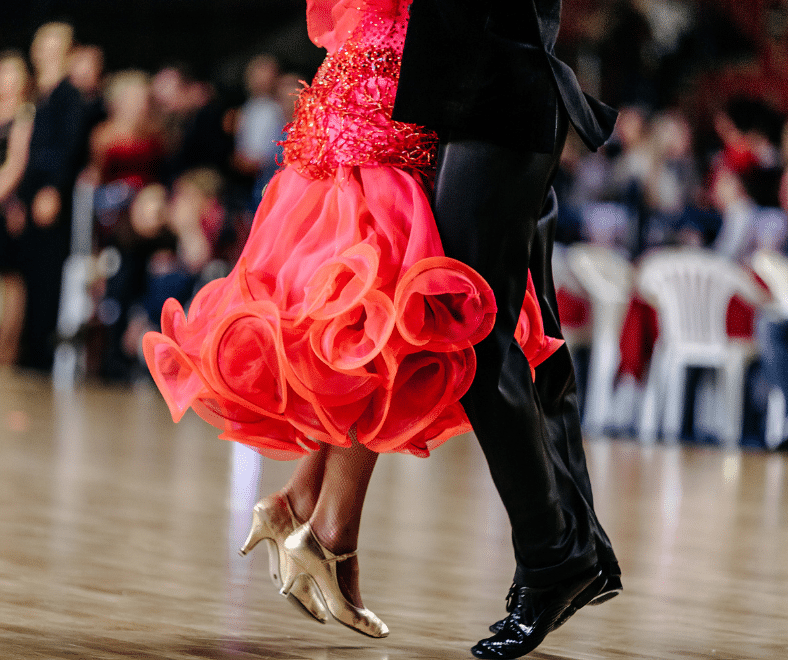
Ballroom dance outfits, especially for the ladies, can range from flirty and fun to graceful and elegant. Latin dance in particular highlights the dancers’ legs and hips, making it more sexy and provocative. But what kind of dresses go well with each of the 5 Latin dances?

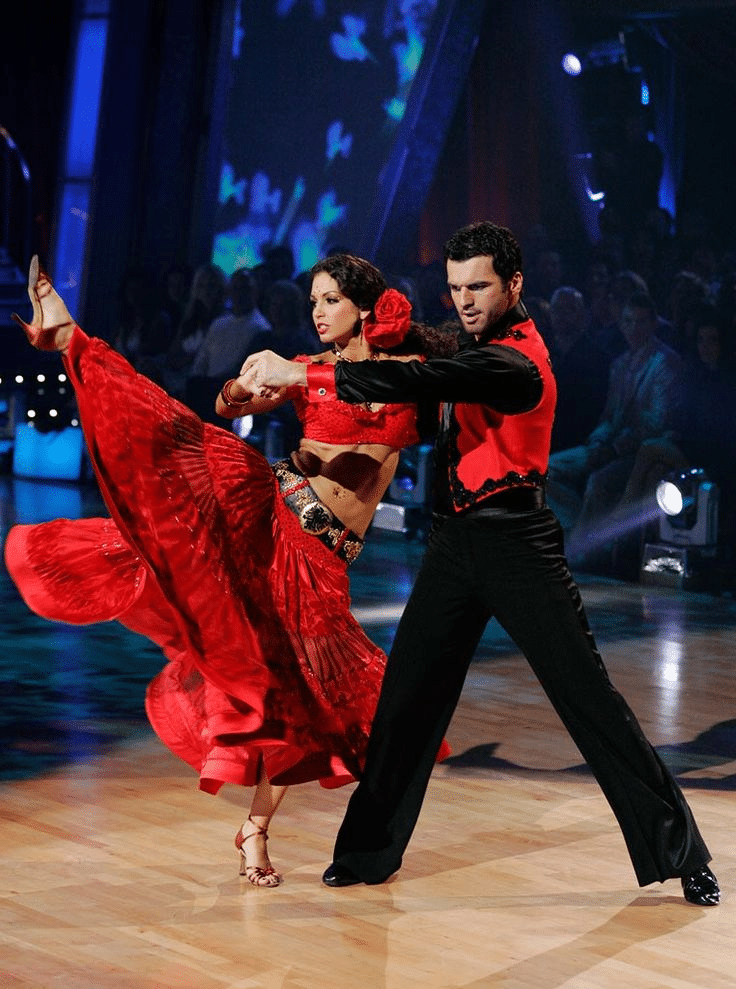
Paso Dobleimage3 -

This traditional Spanish is passionate and desirous. Your outfit should speak to Spanish aesthetics, like adding red or large ornaments or extending the length of your dress. You can also add polka dots, flowers, or epaulets to your dress to mimic the aesthetic of the matador and of the flamenco dancer.
 

FADS Blog Post Images 2021 12 e1616442883362 -

Samba

This dance is all about show and spectacle, and you’re going to want your dress to speak to that. Arguably the most important part of a samba dance is bounce. In order to emphasize the voluptuous movement of a samba routine, we recommend using boa and individual feathers as part of your outfit, especially around the hips. The feathers will synchronize their movement with your own, creating the volume and bouncy effect of the dance.


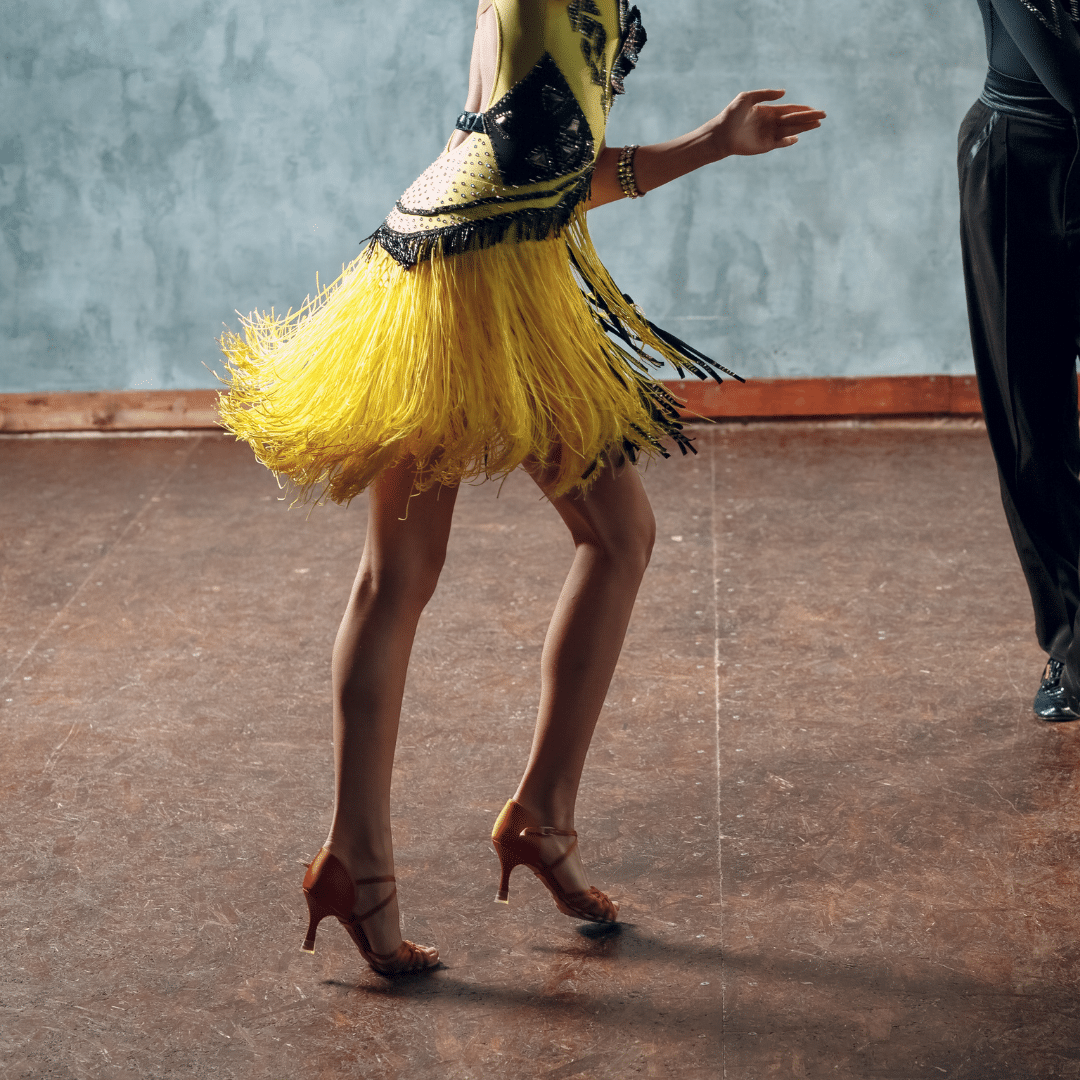
Cha-ChaFADS Blog Photos -

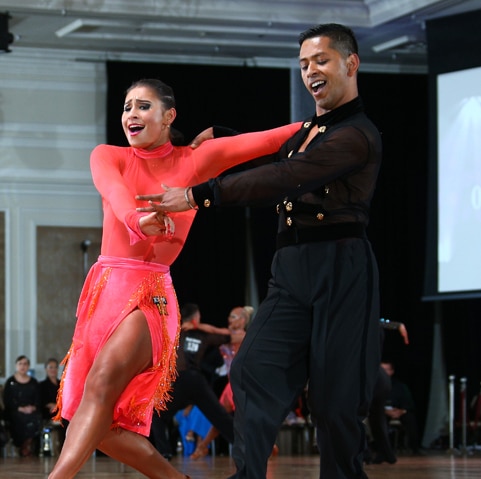
One of the more provocative dances, this dance style focuses on hip movement. It’s all about the flirtatious and fun aspect of partnered dance. To forefront the hip and leg movement, you’re going to want bright, fun fringes. It’s suitable to have a short dress for this type of dance, or even a separate top and skirt.


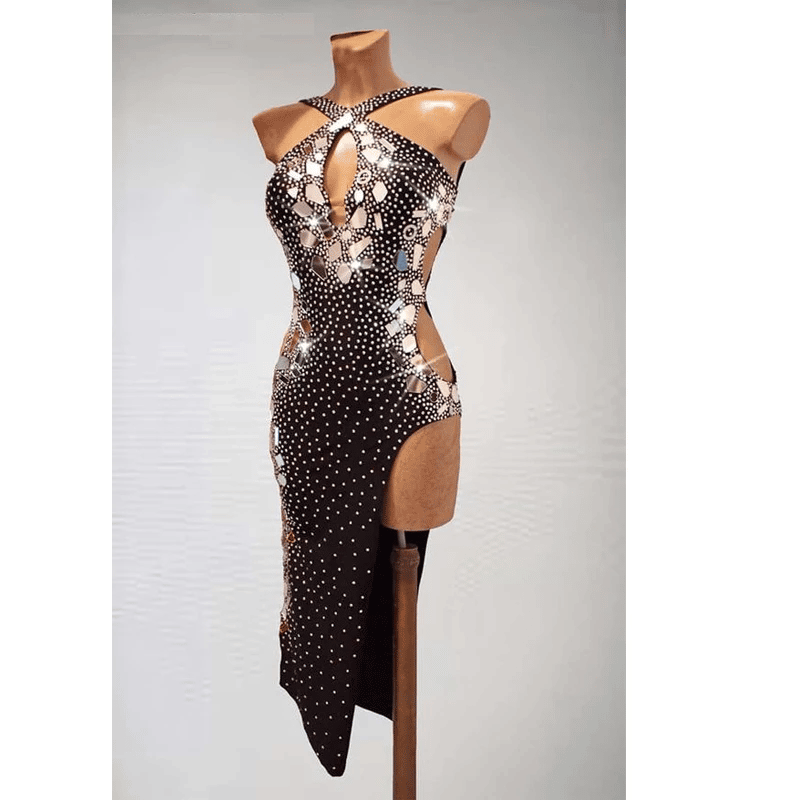
Rumbaimage4 e1657138277383 -

Last and certainly not least, Rumba. Rumba is all about sensuality and romanticism. For this reason, your dress should be revealing, but delicately and tastefully. The fluid movement of this type of dance asks for skin-tight outfits or dresses that wrap and hang around your body (consider silk). For a really eye-catching look, we recommend adding crystals to your outfit to make it glitter in the parque light.


With these tips in mind, you’ll find the perfect dress that’s right for you and your dance style for your next routine!