A letter to my students: Create Stories that Matter

Vincas Greene was Chair of the Department of Dance at Brenau University in Gainesville, Georgia, and worked there for 21 years. Students adored him and affectionately referred to him as “Master Greene”. Upon leaving Brenau and moving to Spokane, Washington, to continue to develop his art form, Greene communicated to his students via a heartfelt letter. That letter, his “last message”, was so inspiring that we wanted to share it with our readers. Maybe you could empower your dance students with a similar message?

My dear dancers,

I would like to preface this with the note that I love you. You all know Terpsichore is a hard mistress, and we empower her to keep her eagle eyes upon us so that we may constantly be prepared as her emissaries or, as Martha Graham calls us, “Athletes of God”. To this end, I must challenge you to accept these words from a teacher/friend/elder/lover who wants each of you to be the best artist, dancer and person you can possibly achieve.

The Scottish psychologist R.D. Laing wrote, “Life is a sexually transmitted disease, and the mortality rate is 100 percent.”

This entwines with our lives as dancers so well – Dance is passed from one person to another in a centuries’ old chain we can gaze back upon seeing our ancestors as they struggled, loved and taught each other, transmitting their knowledge, discoveries and passions over the years to our most recent teachers, to each of us and then on to our students and, in my case, to my grandchildren of dance. Dance is the physical manifestation of passion, and dancers are the vessels. We become so full of passion it leaps out as dance, love and art. No wonder the world sees us as sensual because our life is communication made physical. Even as our bodies begin to slow, our minds still rage with the exuberance of youth as we picture new dances forming and how our dream-perfect bodies would experience each movement. You can see it in the eyes of our elders as they describe to us past performances and new ideas – and we can also see it as their bodies still enact, as best they can, each nuance that is being described. But we know that for each of us, eventually, the body and the mind come to perfect stillness and the end of the dance, when the performer leaves the stage.

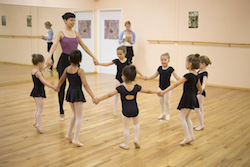
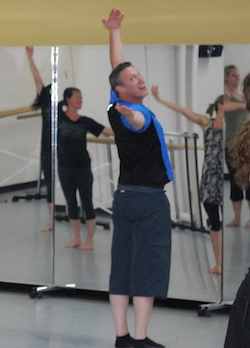
Vincas Greene teaching Brenau University dance students. Photo courtesy of Greene

Vincas Greene teaching Brenau University dance students. Photo courtesy of Greene

The time between discovering our passion for dance and the stillness should be full of stories. A story to be spoken or danced is what we have to offer – to contribute to those with us now and those who will hear of us later. Remember, dance is the most ephemeral of the arts, so it is our stories that we leave behind when we leave the stage. I am challenging each of you to create stories that matter. Have experiences that will help you to live stories of excitement, challenge, trepidation, pain, redemption, love…stories that are powerful!

I remember talking to a highly accomplished dancer and having her explain some of her experiences with touring, choreographers and other dancers. She just considered them her own experiences. When I told her that she should tell those experiences to her students as stories, she looked at me with confusion. She didn’t consider her life as a story but just as a personal event. The idea that her life could be shared to teach, motivate, warn and even entertain came as a shock to her. Her life is truly amazing, and she has started to share it as stories for her students, and the stories will be passed on now to illustrate that dance matters. The idea that my life and your life stories are to be created has me stirred up.

This idea has me contemplating fear, regret and risk. Mark Twain said, “Twenty years from now, you will be more disappointed by the things you didn’t do than by the ones you did. So throw off the bowlines, sail away from the safe harbor, catch the trade winds in your sails. Explore. Dream. Discover.”

As you sit here listening to me, check in with yourself. Notice what thoughts are being stirred up. Notice what you think you ought to be doing or pursuing. Notice what you think would be best for yourself as opposed to what others think would be best for you. Notice now the thought at the edge of your mind that is terrifying. The “if only” or “what if” thought that you immediately reason away – it’s not practical, that’s not possible, everyone would think I’m crazy, my parents/friend/lover would be so mad at me, that’s only for special people – whatever your excuse to cancel that thought out. That is the thought that stories are made of! Embrace that thought, challenge yourself to that thought, wrestle with that thought (like Jacob with God for his blessing), and find your path to your story.

This will also take work and sacrifice. I am not saying drop everything and go a new way. You must discover, invent and plan your way. Being here is a wonderful way to follow this path. But while you are here and wherever you discover yourself in your story, you must embrace it fully. Don’t let yourself be set on cruise control, don’t take the easy way, don’t skip the steps that will make you learn and grow – these all lead to a boring story that you won’t even interest yourself in telling. As a dancer, this means learn your craft and craft your vessel. A flaccid leg is a smudge, not a line. It takes muscles to move your body, understanding to know what you want to achieve, desire to push yourself to excellence – dance must matter to you, matter to the very core of your soul! The first plié in class must matter to you. If it doesn’t, it is just wasted time, energy…wasted life. The dancer cares for each movement, as the poet places each word thoughtfully and carefully in the verse. Place your dancing in the middle of your love. Care for your dancing, learn your dancing, learn about your dancing, tell others the small stories you are creating about your dancing, carry your dancing with you; don’t leave it to be picked up in the corner of the studio whenever you happen to be there.

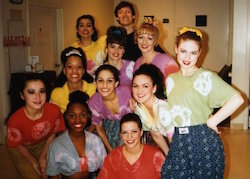
Vincas Greene with Brenau University dance students. Photo courtesy of Greene.

Vincas Greene with Brenau University dance students. Photo courtesy of Greene.

I believe dance as life is terrifying. To approach each day as the day to improve your craft, make yourself stronger, give yourself more knowledge, and challenge yourself to be greater than the day before is ultimately a scary life. There is nothing easy about choosing to dance – you must constantly defend your choice, challenge yourself physically and mentally, listen to constant critique, and believe that what you are doing matters – matters to yourself, matters to art, matters to our world.

Be courageous in your belief that your life story matters. It is truly a risk to embrace the arts as life, and choosing dance among the arts is probably the riskiest. Following a path of passionate dance is not easily understood by our society. But our society also loves the underdog who takes a risk to pursue the elusive dream. Telling that story, your story, of how you are on the path is the story that draws people in to you. They are illuminated by the fire of your passion and excited by the depth of your dedication.

The world is littered with people who didn’t risk themselves. Their stories are boring, uninspiring and predictable. I remember the absolute fear of starting my life story in dance. I remember the fear of starting new chapters in this story – when I was moving to New York and really just wanted to stay home. The transition of sitting on the jet, mortified at what I was doing, and then relaxing into the adventure when the wheels left the ground and there was no turning back. As you know, I am starting a new chapter in my life story. My stories are getting a little worn, this chapter needs to end, I am terrified of what lies before me and just want to rush back into the comfort of being your “Master Greene”, but another chapter of new stories with adventure, creation, challenges, failures and accomplishments is tantalizing…also, how can I lead if not by example? I can’t have you lose faith in me. So, my parting advice to each person here today: “Take the path that is the scariest to you. Only by risking will you overcome your fears and learn something new. Don’t regret that you didn’t take the chance. Work like it matters and don’t accept less from yourself. Make your story an exciting one.”

With love,
Master Greene

Photo (top): Vincas Greene with Brenau University dance students. Photo courtesy of Greene.

The post A letter to my students: Create Stories that Matter appeared first on Dance Informa Magazine.
Dance Studio Owners: Are you making this mistake?

The BIGGEST mistake Dance Studios are making in their marketing right now…

Here’s a BIG question for you this week, lovely Dance Informa readers!

When it comes to your studio, are you marketing what you DO or are you marketing what you GIVE? You see, one of the biggest challenges is how to promote your studio in a highly saturated, competitive market when EVERYONE is trying to promote the same thing!

Every studio offers ballet, jazz, tap, hip hop etc. We need to discover your unique positioning and differentiation in the market.

The wonderful thing is that every studio is different. Some studios are more technique focused. Others give amazing performance opportunities. Whilst some studios pride themselves on individual nurturing and personalized attention.

Really step into the hearts and mind of that parent who is choosing a studio for their child. What are they looking for? What is important to them? How do they want their child to feel? What would turn them off choosing your studio? The more we can understand what your dream student is seeking in a studio, the more we can tailor your marketing message to speak directly to their hearts.

In a nutshell, shifting your marketing message to share what the students will EXPERIENCE at your studio as opposed to what you do in your studio is a wonderful way to connect more with your marketing and start attracting more students.

It’s not about the class itself, it’s about painting a beautifully vibrant picture of how they’re going to feel when they’re in the class.

The studio with the most connection in their marketing will win – and the best thing is that all it takes is a few little tweaks.

In the comments below, share how you describe the experience at your studio…

And, if you’re looking for more guidance on how to craft your studio’s marketing message, the best place to start is in the Free30 Enrollments in 30 Days” mini course. This course has been designed for studio owners and will walk you through how to rapidly ramp up your registrations. Click here and watch the first video now.

Here’s to more passion, more profits and more purpose in your studio!
All my best,
Chantelle

By Chantelle Bruinsma Duffield of studioexpansion.com

The post Dance Studio Owners: Are you making this mistake? appeared first on Dance Informa Magazine.
This new year, take ‘I’m too busy’ out of your vocabulary

This new year, take “I’m too busy” out of your vocabulary for healthier body and mind, and dive with your whole self into a richer life.

“Oh my goodness, how are you?” an old friend squeals when I see her at the store recently. “Busy,” I reply with my default answer. “Oh I knoooowww, we’re so busy, too,” she says, rolling her eyes; both of us using the word “busy” like we won some kind of prize for how great our lives are. My newsfeeds declare: “Busy is the new normal”, “Busy is the new happy”. Studies show that stress plays a role in so many real health consequences: anxiety, insomnia, stomach pain and weight gain just to name a few.

This new year, join me in resolving to take back our health by not letting “busy” justify nourishing our bodies with artery-clogging, high calorie, low nutrient, dense food. We have the power to choose how we fill our time and what we fill our bellies with. The food you eat is broken down into building blocks for new cells, for the production of new muscle tissue, for recovery, and for every biological process that makes us work and affects our aging. Let’s choose those building blocks with intention.

Join me this year in taking back what we fuel our bodies with because we quite literally are what we eat. Here’s how we are going to do it:

Planning! Have good stuff on hand. Meal and snack planning is worth your time, and if you want to be healthier in 2016, it is not optional.  

  • Make sure you always have healthy snacks on hand at home. Always have a fruit basket, nuts, hummus, yogurts, cup of soups and pre-made bars, so when you get hungry and you need something to grab it’s already there.
  • Have pre-washed greens in your fridge at all times. They can be thrown in salads, in soups, or paired with a frozen veggie burger.  
  • Quickly sketch out an outline for your most challenging meal. Make a list of the key components. It can be on the back of an envelope or on your phone. Just enough information to make sure you have a few key ingredients on hand at home. For example:

food chart


Now, at the store you know you need at least veggies, greens, lentils, beans, bread and pasta.

Technology can be awesome; let’s use it! There are lots of websites that will meal plan for you and even deliver pre-made meals right to your door. On your busiest day, have Thrive Foods Direct send your meal right to you. Here are my favorites:

thrivefoodsdirect.com

getmealplans.com

happyherbivore.com

mymenupal.com

nutritionmd.org/index.html

A slow cooker/crock pot will save your life.

Every one of the meals listed in the chart above can be made in a slow cooker (some recipes are on my website). Beans, lentils and peas are longevity foods, according to the Blue Zones Project; plus, they have protein, iron and fiber. They can be thrown in the slow cooker in the morning, and by evening you have dinner ready for you. They are an inexpensive and health-promoting source of protein and go in many different dishes from Tex-Mex to Mediterranean to Indian.

Let your freezer make your life easier.  

Make large batches of beans, peas and soups, and then freeze in small glass containers like Pyrex or even mason jars. Stock up on frozen veggie burgers, edamame, peas, corn and whole grain breads like Udi’s Millet Chia bread.

Invest in a good blender.

Get in the habit of making smoothies at least two times per week. Use almond milk (a good source of calcium and vitamin D), Swiss chard leaves, frozen berries and chia seeds for a calcium rich but plant-based snack. I throw nuts and seeds in the blender to thicken it up and to provide protein and healthy fats.

Have premade snacks ready to go.

Try the Dr. McDougall’s Right Foods brand. They are meals in a cup that can be heated in one minute, cost less than $2/serving and are delicious and healthy.

Buy or make hummus and use it as a dip for veggies every day. Use it as a quick dressing for kale salad by massaging hummus and lemon juice into the kale, and done! Have storebought or homemade bars with you every day. I like the Kind bars, Bobo’s Oat bars, Lara bars and Barre bars. I also have recipes for no-bake almond oat bites on my web site, www.dancernutrition.com.

I’m done with the glorification of busy in place of a healthy lifestyle. Let’s make healthy eating a priority this year!

By Emily C. Harrison MS, RD, LD of Nutrition for Great Performances.

Emily Harrison

Emily Harrison Dance Nutritionist

Emily Cook Harrison MS, RD, LD 
Emily is a registered dietitian and holds both a bachelor’s and master’s degree in nutrition from Georgia State University. Her master’s thesis research was on elite level ballet dancers and nutrition and she has experience providing nutrition services for weight management, sports nutrition, disordered eating, disease prevention, and food allergies. Emily was a professional dancer for eleven years with the Atlanta Ballet and several other companies. She is a dance educator and the mother of two young children. She now runs the Centre for Dance Nutrition and Healthy Lifestyles. She can be reached at emily@dancernutrition.com
www.dancernutrition.com

The post This new year, take ‘I’m too busy’ out of your vocabulary appeared first on Dance Informa Magazine.

What Type of Dress Should You Choose for Your Latin Dance?

Ballroom dance outfits, especially for the ladies, can range from flirty and fun to graceful and elegant. Latin dance in particular highlights the dancers’ legs and hips, making it more sexy and provocative. But what kind of dresses go well with each of the 5 Latin dances?

Paso Dobleimage3 -

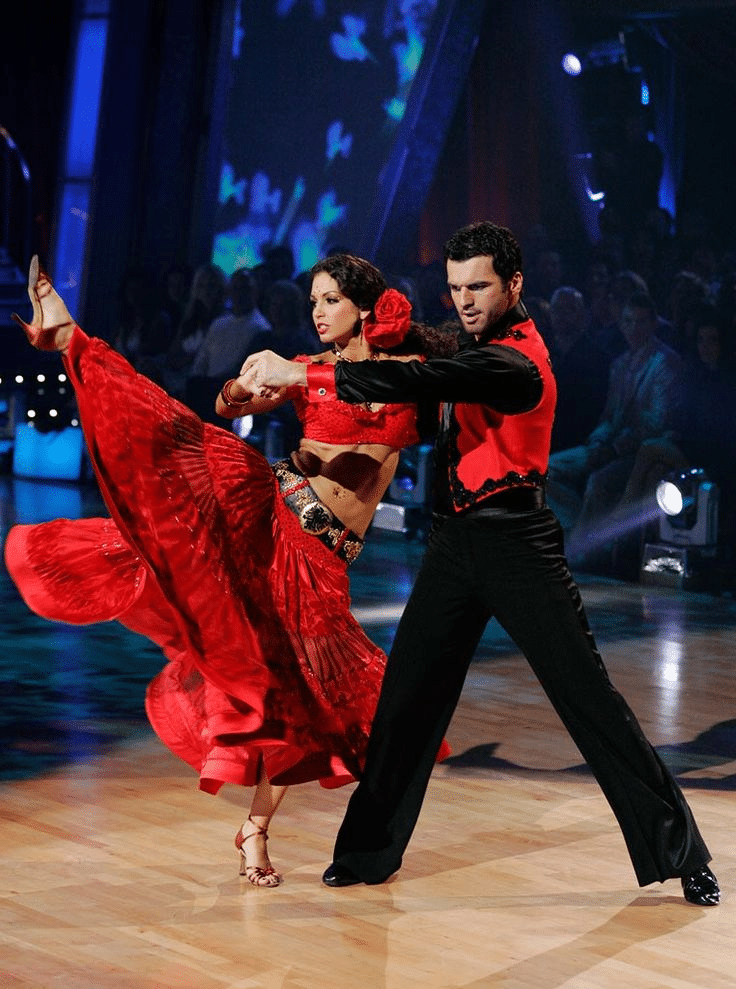
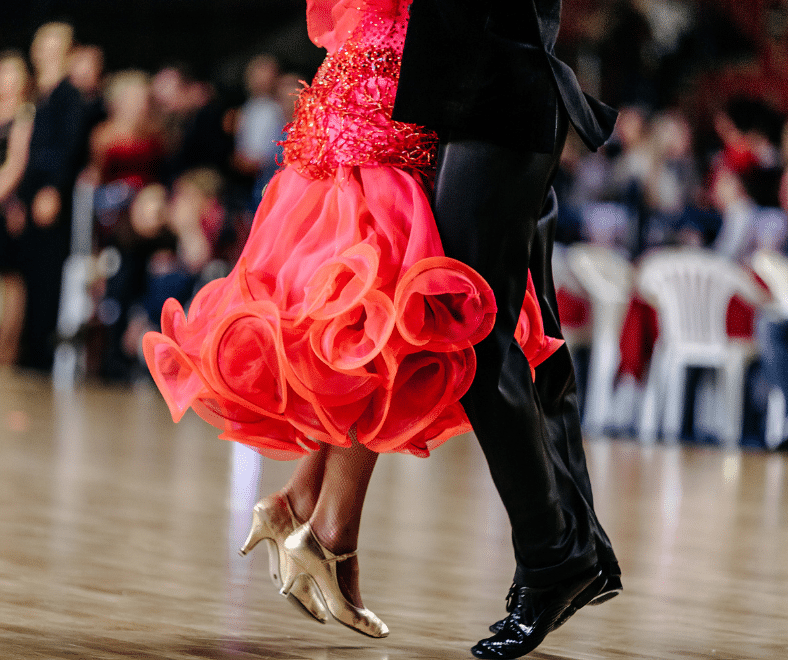
This traditional Spanish is passionate and desirous. Your outfit should speak to Spanish aesthetics, like adding red or large ornaments or extending the length of your dress. You can also add polka dots, flowers, or epaulets to your dress to mimic the aesthetic of the matador and of the flamenco dancer.


FADS Blog Post Images 2021 12 e1616442883362 -

Samba

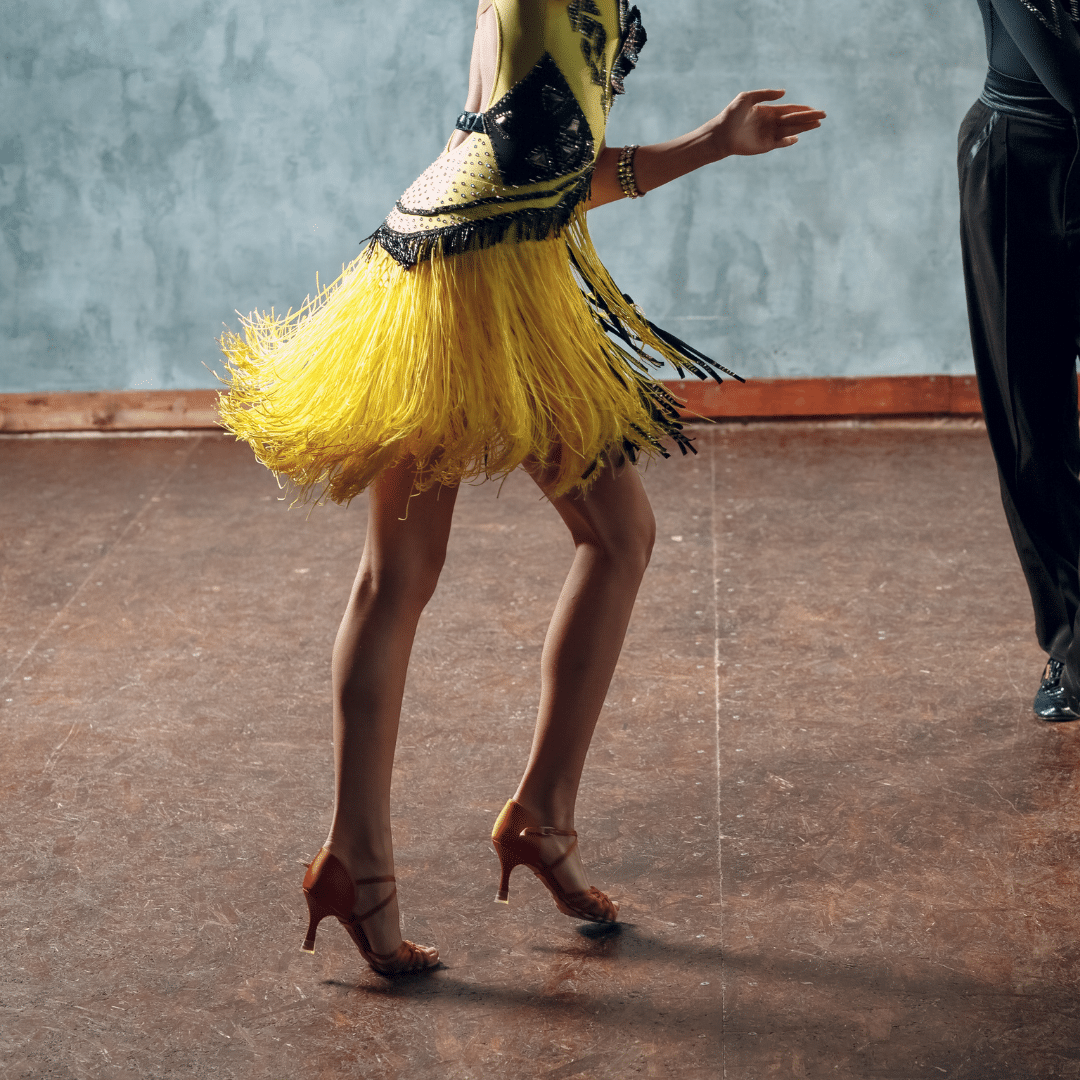
This dance is all about show and spectacle, and you’re going to want your dress to speak to that. Arguably the most important part of a samba dance is bounce. In order to emphasize the voluptuous movement of a samba routine, we recommend using boa and individual feathers as part of your outfit, especially around the hips. The feathers will synchronize their movement with your own, creating the volume and bouncy effect of the dance.


Cha-ChaFADS Blog Photos -

One of the more provocative dances, this dance style focuses on hip movement. It’s all about the flirtatious and fun aspect of partnered dance. To forefront the hip and leg movement, you’re going to want bright, fun fringes. It’s suitable to have a short dress for this type of dance, or even a separate top and skirt.


Rumbaimage4 e1657138277383 -

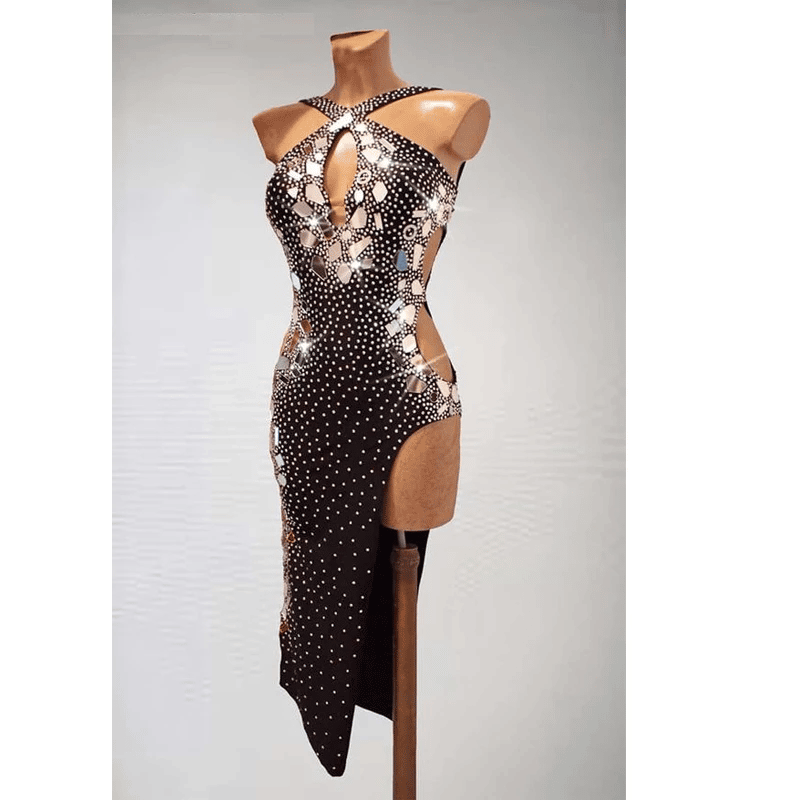
Last and certainly not least, Rumba. Rumba is all about sensuality and romanticism. For this reason, your dress should be revealing, but delicately and tastefully. The fluid movement of this type of dance asks for skin-tight outfits or dresses that wrap and hang around your body (consider silk). For a really eye-catching look, we recommend adding crystals to your outfit to make it glitter in the parque light.


With these tips in mind, you’ll find the perfect dress that’s right for you and your dance style for your next routine!

CLI Studios: Inspiration, Collaboration and Education

Note: CLI Studios has recently revised its products and services to provide them all through its Studio Partnership Program, where CLI works directly with dance studios. Stay tuned for a new article on CLI’s programs in 2018!

It is rare to find a dance company so willing to be about the artist, and not ulterior motives. CLI Studios is about the artist. They’re more about the dancer and teacher learning and continuing to stay inspired, and less about how much money they make at the end of a fiscal year. CLI Studios is about the choreographer, the dancer, the teacher, and the studio owner growing and collaborating to fuel the world of dance through online sharing. This is a business model I can get behind.

Co-founders Jon Arpino and Teddy Forance. Photo courtesy of CLI Studios.

Co-founders Jon Arpino and Teddy Forance. Photo by Rob Daly and Quinn Wharton.

About two years ago, CLI Studios Co-Founders Jon Arpino and Teddy Forance were talking about how Forance and a few other notable choreographer friends receive requests from studios all around the country and world to teach master classes. Time for these renowned choreographers, however, is precious and rare. Also, unless you live in New York or Los Angeles, it is unlikely you have the opportunity to take class from Allison Holker, tWitch, or Caitlin Kinney on a weekly basis.

Enter CLI Studios – an online dance class sharing platform that allows members the opportunity to learn from 40 different choreographers at any given time for a low price.

As stated on its website, “Every week, CLI Studios uploads instructional videos of our choreographers to the members-only section of this site. The videos include full combinations, warm-ups, across the floor combinations, and strength and conditioning exercises from some of NYC and LA’s top choreographers. These videos allow dancers and teachers around the world to take classes on their own time and schedule, for an incredibly affordable price. CLI Studios is a great supplement to a dance studio education, and a great way to continue your education after life at a dance studio.”

Arpino says there are three different programs from which to choose.

CLI Studios logo“The first studio package is for $100 per month,” he says. “Some studios have 20 teachers, and we offer access for the entire faculty for a flat fee. The more teachers you have, the more cost effective it becomes. Then we have a program for teachers for $40 per month. That’s super popular. Right now, we offer two classes per week for teachers, so that’s about $5 a class. And then we offer a program for dancers that’s $20 per month. They get fewer classes than the studio program, so it’s not like a library of classes like the teacher and studio program, but it’s still less than $5 a class.”

Some of the choreographers represented at CLI Studios include the aforementioned Teddy Forance, Allison Holker, tWitch, Caitlin Kinney, as well as Kathryn McCormick, Nick Lazzarini, Kenny Wormald, Kyle Robinson and many more. Most of these choreographers travel with conventions, tour as back-up dancers, or perform on shows like So You Think You Can Dance and Dancing with the Stars, staying constantly busy.

Teddy Forance and Caitlin Kinney, choreographers for CLI Studios. Photo courtesy of CLI Studios.

Teddy Forance and Caitlin Kinney, choreographers for CLI Studios. Photo by Rob Daly and Quinn Wharton.

“We filmed with over 40 different choreographers within the last year,” Arpino states. “It is the first time I know of where you are able to take a class from all of these renowned choreographers at your own time, in your own space, from anywhere in the world. It gives people a great opportunity to learn from some of the top choreographers in the country. We’re always looking for more ways to educate and inspire people, and get dance videos online.”

CLI Studios offers multiple styles of dance, including jazz, contemporary, ballet, basic technique, hip hop, salsa and more. “We like to keep it diverse in terms of styles,” Arpino says. One benefit of CLI Studios for teachers is learning a multitude of dance styles that you may not be as comfortable with, and keeping up with ever-evolving dance trends.

“If you’re teaching at a studio but you’re not a hip hop teacher, you could watch one of these videos, learn four to six counts of eight of the Intermediate Hip Hop class and teach that,” Arpino explains. “Even though a certain style might not be your go-to style as a teacher, someone like Kenny gives you choreography that you can effectively and efficiently teach to younger students. That’s the benefit of doing it online – you can experiment with different styles and not jump into a class when you might be in over your head as a dancer or teacher.”

Twitch instructing a class for CLI Studios. Photo courtesy of CLI Studios.

Twitch instructing a class for CLI Studios. Photo by Rob Daly and Quinn Wharton.

To those who would question the idea of dancing at home, and the safety concerns involved with that, Arpino says he is not worried as of now. He says, “Right now, we offer intermediate and advanced classes that are really geared toward dancers who are training at studios pretty frequently. On a technical level, it’s really up to you to know what you can and can’t do. No one in the video is telling you to do an ariel for the first time.”

He continues, “As we branch out in to more intermediate styles, I think [safety] is definitely something we’ll have to be very conscience of. We’re teaching people how to move who might not have the experience or the flexibility. Our choreographers are really good at teaching different moves that are challenging or something that might be pushing you, but they’re good at breaking it down and not pushing someone too far.”

CLI Studios wants to challenge, inspire and continue collaborating with many different artists and choreographers. One of those artistic humans is Wade Robson. CLI and Robson recently worked together to create a short dance film entitled FLIGHT.

About Robson, friend and collaborator Teddy Forance says, “Wade and I have wanted to work together for a long time. CLI is definitely in the instructional video space. We’re not really a dance film company, but any time you have any opportunity to work with a great choreographer or great director, I think that’s what we want to do…to offer not only education, but inspiration for our teachers, students and fans.”

Teddy Forance and Jaimie Goodwin. Photo courtesy of CLI Studios.

Teddy Forance and Jaimie Goodwin. Photo by Rob Daly and Quinn Wharton.

FLIGHT, the multitude of choreographers, the low cost and the quality of classes available…all of these aspects of CLI Studios are solid reasons for becoming a member of the online dance studio platform.

Co-Founder Forance says it best. “We’re not about replacing your dance studio, or telling you not to go to conventions,” he concludes. “It’s an awesome supplement for a really low price to just stay inspired. For people who want to keep learning and improving, this is a great tool for those goals. Whether you’re a studio, teacher or a dancer, we have a program that we’ve customized for you based around your core values of inspiration, collaboration and education.”

To become a member of CLI Studios, or to learn more, visit www.clistudios.com.

To watch FLIGHT directed by Wade Robson, visit www.clistudios.com/flight.

By Allison Gupton of Dance Informa.

Photo (top): Caitlin Kinney, co-creator and choreographer for CLI Studios. Photo by Rob Daly.

The post CLI Studios: Inspiration, Collaboration and Education appeared first on Dance Informa Magazine.
Costume Inspiration: Dance Costume Guide Out Now

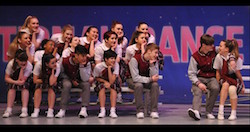
It’s time to get inspired and excited for your next recital, so start looking at costume choices! This season there are so many gorgeous styles and looks to choose from, with hundreds of elegant, fun, cute, colorful and character designs.

Dance Informa’s popular Dance Costume Guide is out now, featuring the industry’s top dance costume designers and stockists.

Check out the 2016-17 Guide now and get swept away in glitz and glamour as you choose the looks for your next show or competition.

Danceinforma.us/recital-costume-guide


The post Costume Inspiration: Dance Costume Guide Out Now appeared first on Dance Informa Magazine.
What should students choose? College, concert or commercial dance?

As dancers chassé toward their senior year of school, they begin to decide where dance will take them. Where will they take that next step, or leap, to make their dance dreams a reality? There are so many options across college dance, the commercial scene and company work. Will they audition for a feeder school in hopes to join a concert dance company, will they get an agent and seek commercial work, or will they dive headfirst into academic study at a leading college?

Traditionally, there has been a disparity between concert, commercial and collegiate dance careers, and young students can feel that their choice now may limit their career choices in the future or box them in. But is this changing? And how can you help your students to navigate the gap between these three very distinct dance worlds?

Martin Harvey at Dance Teacher Summit

Martin Harvey at Dance Teacher Summit

Martin Harvey, former principal with The Royal Ballet, who is also an actor and Broadway performer, says, “On the surface, there is definitely a gap. However, underneath, we’re all going for the same thing.”

Commercial dancer Teddy Forance, who hails from a competition dance background, shares the same sentiment, saying, “I think there is still a gap, but it’s definitely closing more and more. I think University of Southern California was massive for the dance world to see. This college is built upon showing different ideas and concepts. You’ve got Forsythe, but then you also have commercial people coming in and teaching.”

Emmy-nominated choreographer Al Blackstone also feels like the gap is “absolutely closing”, adding, “I feel like I thrive in that gap! I enjoy adapting to the kind of audience that my work will have and figuring out how to connect with them most effectively. I try not to worry about which areas of the industry I fit into because ultimately, it’s all dancing, and that is the language that I feel most comfortable speaking.”

Harvey, Blackstone and Forance have all very successfully navigated that gap, enjoying exciting, varied and ever-evolving careers in many areas of the dance industry.

Forance speaks fondly of his recent work in the concert dance sphere with Hubbard Street Dance in Chicago. “It was really cool that they opened up the doors, were so generous and so kind, and really enjoyed my work. It was a really interesting collaboration.”

Teddy Forrance

Teddy Forance. Photo by Katie Goughan.

Blackstone, who seems to jeté effortlessly across many spectrums of dance, is excited about the merging of different dance worlds, sharing that “dancers now have more access to information and training than ever before, and it means that dancers are able to be more versatile than ever. In New York, there are company dancers dancing on Broadway and ballet dancers doing music videos! Different communities are feeding off one another in order to evolve, and it means that the lines are increasingly being blurred.”

With these lines blurred, how can dance educators equip their students to bridge the gap so they, too, can achieve successful and fulfilling careers in any area, or multiple areas, of the industry?

Harvey tells educators to “encourage open-mindedness and provide/lobby for diverse and balanced training at their studios.”

Forance shares practical advice saying, “I think it’s about being informed. Map out on paper all the different options for colleges and the choices you can make. There are so many different things to research out there — for example, Arts Umbrella in Canada, has a way to do a year training program without an academic program.”

He adds, “Give them all the tools you can, and really be knowledgeable yourself across not only the competition convention scene but also the collegiate level, companies, what’s happening in LA. Talk about getting an agent and the process for that. I think there are so many things that go in to preparing someone to be a professional dancer, more than just how to move!”

Blackstone adds an emphasis on broad training. “I think that solid training and encouraging our students to have an open mind will always be the key to versatility. If we can encourage our dancers to be curious and try new things, then they will have a better chance of branching out in to different areas of the industry.”

Forance agrees. “It’s about being someone in the room who is just agile with anything that comes at them — words, or movement or energy,” he says.

Al Blackstone at Dance Teacher Summit

Al Blackstone at Dance Teacher Summit

“Hold your students accountable,” stresses Blackstone. “As a convention teacher, I see kids skipping classes all the time because they ‘don’t like’ or ‘don’t do’ that style. It breaks my heart because they are so young and already boxing themselves in and setting limits on what they think they are capable of!”

In addition, “Ask the students to invest in finding out who they really are,” digs Harvey. “Spend a little less time on ‘what’ is happening and more on ‘why’ and ‘how’ it’s happening. Suggest that the students might start thinking as if they were a director or a choreographer.”

Blackstone, who will be teaching at this summer’s Dance Teacher Summit (DTS) aims to help educators have these discussions so they can assist students to best navigate the industry. “Dance Teacher Summit connects the people who are responsible for fostering the next generation of dancers in this country. We come together to share ideas, try new things, have conversations and dance together. Regardless of what part of the industry we inhabit, it is the kind of place where you immediately realize how connected we really are.”

With leading educators and professional dancers and choreographers from across the commercial, concert and collage scenes speaking and instructing, DTS brings these worlds together in one place.

Harvey says, “I think DTS does a marvelous job of making an energetic fact into a tangible reality. We are all connected, and we do all care, so bringing us together to help further sculpt ourselves can only be good news for the future.”

And as Forance stresses, it’s all about being “informed”. We can’t all know everything happening in the industry, but when we come together, we can learn, grow and, very importantly, be re-inspired for the new teaching year.

“You’ve got to fill your cup back up before you let people drink from your inspiration,” says Forance.

Join Harvey, Forance and Blackstone at Dance Teacher Summit this July and August. For more information, visit www.danceteachersummit.com.

By Deborah Searle of Dance Informa.

The post What should students choose? College, concert or commercial dance? appeared first on Dance Informa Magazine.
How to Deal With Perfectionism

Perfectionism is a common trait among ballroom dancers. It can be helpful in driving you to improve your skills and become the best dancer you can be. However, perfectionism can also be harmful if it leads to excessive self-criticism or perfectionistic standards that are impossible to meet.

There are some things you can do to help control perfectionism and keep it from becoming a problem. 

First, try to be aware of when you start to feel perfectionistic tendencies creeping in. If you can catch yourself early on, you can nip them in the bud before they get out of hand. Perfectionistic tendencies include setting unreasonable goals for yourself and constantly comparing yourself with others who you perceive to be perfect.

FADS Blog Photos 2 -Second, remind yourself that nobody is perfect and that mistakes are part of the learning process. Perfectionism can lead to a fear of making mistakes, which can actually hinder your progress as a dancer. Making those mistakes can lead you to be more aware of and set realistic goals for yourself.

Finally, you’re not a god. We ask ourselves why we can’t do something perfectly, and the answer is you simply aren’t (and no one around you is) perfect.

If you find that perfectionism is starting to become a problem in your life, it may be helpful to seek out professional help. A therapist can help you understand the root causes of your perfectionism and develop a plan to manage it.

Perfectionism is a common trait among ballroom dancers, but it doesn’t have to be a problem. With awareness and effort, you can control perfectionism and use it to your advantage. Perfectionism can drive you to improve your skills and become the best dancer you can be. Just remember to set realistic goals, accept that mistakes are part of the learning process, and be willing to let go of perfectionistic standards that are impossible to meet.

Getting its Groove back: Groove Dance Competition and Convention extends the 2020 season

Much of the dance competition circuit has been on hold for months as the U.S. (and the rest of the world) grappled with COVID-19 restrictions. Dancers everywhere are itching to return to the stage, so as each state begins to emerge from lockdown, Groove Dance Competition and Convention is ready to go. From July, make-up events and regional competitions will start to go ahead, with new procedures in place to ensure safety for all.

The extended 2020 season means Groove can continue to offer dancers its usual inspiring, high-energy competition experience, but in line with health and safety guidelines. 

Safety precautions at the new events include recommendations for attendees to wear masks and participate in temperature checks, mandatory temperature checks for staff, socially distanced seating, rigorous sanitization procedures, and there will be no scoring deductions for costumes featuring safety elements like face shields or masks. And, as always, Groove’s slick live streams will be available to ensure spectators can watch from home if they prefer.

Dancers at a Groove Dance Competition event. Photo courtesy of Groove.

Throughout July, August and September, these regional competition events, which include free master classes, are now scheduled for cities around the U.S., starting with a Virtual Competition on July 31, open to anyone in the country. In October and November, one-day conventions will hit key cities, offering multiple master classes, scholarship opportunities and more.

In order to keep studios as informed as possible, Groove is sending out updated information at four weeks prior to each event – and again at two weeks prior if needed – outlining any event-specific guidelines mandated by the host state. This might mean rotating studios, dressing room-specific regulations and mandatory temperature checks. In keeping everyone as informed as possible, the Groove team hopes to ensure the events run just as smoothly as they usually do.

Registering your studio for an event is simple; head to www.grooveregistration.com/Register and fill out your details to create an account. A full list of upcoming events can be found here, and each individual event page includes further details such as the host hotel and links to book online. There’s also a full update on all COVID-19 policies available here.

There’s no doubt that dancers will be thrilled to return to doing what they love most, and the Groove team is excited to welcome everyone back. 

By Emily Newton-Smith of Dance Informa.

The post Getting its Groove back: Groove Dance Competition and Convention extends the 2020 season appeared first on Dance Informa Magazine.
A Brief History of Ballroom Dance

Ballroom dance is a broad term that encompasses a variety of dance styles that are performed in a ballroom setting. These styles include the Waltz, Tango, Foxtrot, Quickstep, and Viennese Waltz. The history of ballroom dance can be traced back to the 16th century in Europe, where it was primarily a social activity for the upper class. However, it wasn’t until the 19th century that ballroom dance began to be formalized and Standardized.

Ballroom Goes Mainstream

Barrie Chase with Fred -One of the most iconic figures in ballroom dance history is Fred Astaire. Astaire was a Hollywood actor and dancer who appeared in a number of musical films throughout the 1930s and 1940s. He is best known for his partnership with Ginger Rogers, with whom he appeared in 10 films. Astaire’s smooth, elegant style and ability to make complex dance routines look effortless helped to popularize ballroom dance in the United States and around the world.

The Ballroom TV Revolution6329cfb3edbe7f00190f00a1 -

In the mid-20th century ballroom dance experienced a resurgence in popularity due to its inclusion in popular culture. The television show “Dancing with the Stars” which started in 2005, has helped to introduce a new generation to the world of ballroom dance and has made it more accessible to the general public. The show features celebrities paired with professional dancers, as they compete against each other in a variety of ballroom dance styles.

In recent years, ballroom dance has also experienced a resurgence in popularity in pop culture, with the success of films such as “Shall We Dance” and “Mad Hot Ballroom.” These films have helped to introduce the sport to a new audience and have made it more accessible to the general public.


Ballroom dance continues to evolve and change with the times, with new styles and variations being created all the time! Today, it is enjoyed by people of all ages and backgrounds, and is a beloved pastime for many.

For more information on the history of ballroom dance, you can check out the following resources:

The International Dance Council

The National Museum of Dance

Learn to Dance With Fred

These resources provide detailed information on the history, evolution, and current events in the world of ballroom dance!